Net or Enclosure? What a Garage Golf Sim Actually Needs, and the Space Each One Costs You
By Divotloft . 12 min read . Updated September 2026
A home golf simulator splits into two fundamentally different paths: a net setup that gives you launch monitor data and practice reps in 10 feet of depth, or an enclosure setup with an impact screen and projector that requires 15 to 20 feet of space but shows you a virtual course. The right choice is not about which is better, it is about which fits your room and matches what you actually want to practice. A net setup costs $1,500 to $2,500 and delivers real ball flight data on every swing with automatic ball return. An enclosure setup costs $4,000 to $8,000 and adds a projected course image and full-round simulation. Choosing the wrong one wastes thousands of dollars and leaves your room sitting unused. This guide compares the two head to head so you can size your room once and build the setup that actually matches it.
Quick answer
A net needs 10 to 12 feet, costs $1,500 to $2,500, and gives launch monitor data with automatic ball return but no projected course. An enclosure needs 15 to 20 feet, costs $4,000 to $8,000, and adds an impact screen and projector. Choose the net for tighter rooms or budget; choose the enclosure for full-round play with a projected green.
This guide contains affiliate links. Divotloft may earn a commission at no cost to you.
What you see and what you lose: net versus enclosure
The net setup shows you your data on a phone or tablet and a physical ball return system that rolls each shot back to you. No projected course, no virtual greens, no visual feedback about where the ball landed beyond the immediate result. The The Net Return Pro Series V2 Golf Net is the standard: automatic return, rated for 200 mph ball speeds, and a 9.5-foot stance mat, set up in five minutes.
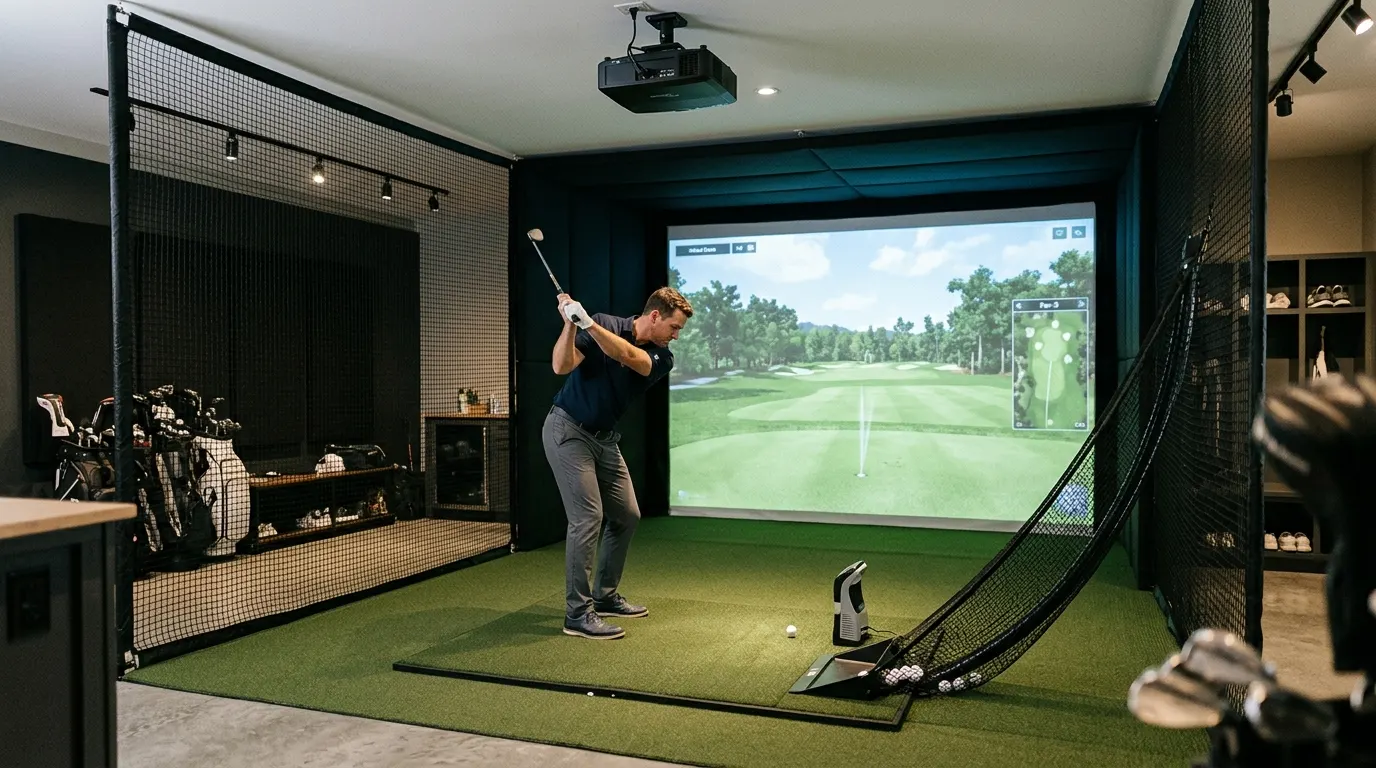
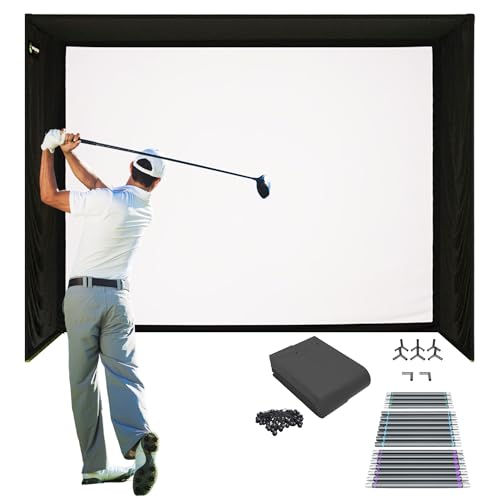
The enclosure setup shows you a projected course on an impact screen behind the hitting area, with virtual ball flight, landing spot, and distance displayed in real time. You see a fairway, a green, hazards, and the results of every shot on the virtual course. The The Indoor Golf Shop SIG10 Enclosure is the standard complete kit: an 11-foot-wide frame with SIGPRO screen, integrated side netting, and tool-free assembly.
The net delivers better rep efficiency and lower cost. The enclosure delivers the full golf experience and significantly improves long-game planning and mental practice. Neither is wrong; they serve different priorities.

The Net Return Pro Series V2 Golf Net
An automatic ball return hitting net rated for ball speeds up to 200 mph with a 250,000-shot guarantee, tool-free assembly in five minutes, and a wide 9.5-foot stance mat included, the standard premium practice net for home simulator setups.
The Indoor Golf Shop SIG10 Enclosure
A complete tool-free enclosure kit in a single box with an 11-foot-wide aluminum frame, SIGPRO impact screen, side barrier netting, and weighted anchors, consistently ranked the best all-in-one enclosure for home builds in 2026.
Space cost: how deep does your room actually need to be
The net setup minimum is 10 to 12 feet behind the hitting position. The The Net Return Pro Series V2 Golf Net requires 10 to 12 feet of depth for safe ball return distance, so the ball does not roll back and hit you or your equipment. Most one-car garages are 18 to 20 feet deep, so a net setup fits comfortably in that footprint. Measure from where you will stand to swing to the back wall, and if that distance is 12 feet or more, a net setup is viable.
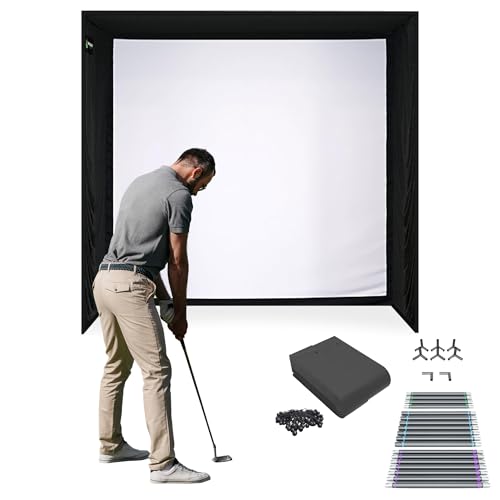
The enclosure setup minimum is 15 to 20 feet behind the hitting position. You need depth for the enclosure frame, the screen, rear impact space, and a buffer behind the screen. Most two-car garages at 20 to 24 feet deep comfortably accommodate an enclosure build with side clearance. A one-car garage at 18 to 20 feet deep can squeeze in a The Indoor Golf Shop SIG8 Enclosure at 8 feet wide with tight margins.
If your room is under 12 feet deep, you are in net territory. If your room is 15 feet or deeper and at least 10 to 11 feet wide, an enclosure build becomes practical. Between 12 and 15 feet, you are in a boundary zone where a net setup is the honest choice.
The Net Return Pro Series V2 Golf Net
An automatic ball return hitting net rated for ball speeds up to 200 mph with a 250,000-shot guarantee, tool-free assembly in five minutes, and a wide 9.5-foot stance mat included, the standard premium practice net for home simulator setups.
The Indoor Golf Shop SIG8 Enclosure
The 8-foot-wide sibling to the SIG10, offering the same SIGPRO screen and tool-free frame in a compact package that fits one-car garages and smaller basement rooms.
Net setup costs: the real price of automatic ball return
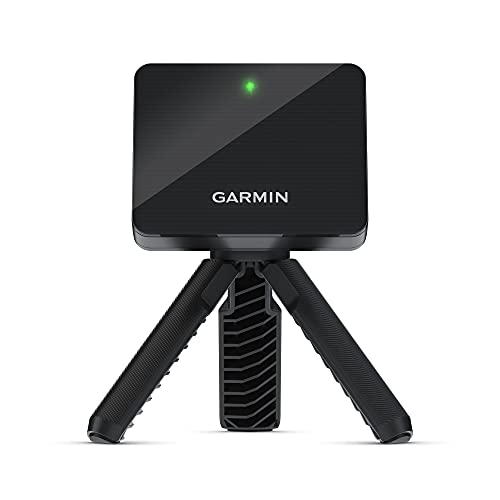
A net setup core costs are the launch monitor, the net with automatic return, and the hitting mat. The Garmin Approach R10 Launch Monitor at $499 to $549 is the standard launch monitor for a net build. The The Net Return Pro Series V2 Golf Net at $649 to $799 includes the 9.5-foot stance mat and automatic return rated for 200 mph. The Real Feel Country Club Elite Golf Mat at $249 to $499 provides the hitting surface. That core totals $1,397 to $1,847 before any flooring or software.
Add SimTurf Foam Floor Tiles for Golf Simulator Rooms and underlayment at $228 to $478 if you want to level the mat to the surrounding floor, and you are at $1,625 to $2,325 for a complete hitting area. If you want course visualization, add a GSPro Annual Subscription or E6 Connect Golf Simulator Software at $250 to $600 per year and display on a TV or monitor positioned beside the net. That keeps the complete net setup under $2,500 in hardware.
The main advantage is cost efficiency: automatic ball return and launch monitor data cost less than half of a full enclosure build, and the depth requirement is 12 feet instead of 20.
Garmin Approach R10 Launch Monitor
A pocket-sized radar launch monitor priced around $500 with zero mandatory subscription and compatibility with E6 Connect, GSPro, and over 42,000 Home Tee Hero virtual courses via the Garmin Golf app.
The Net Return Pro Series V2 Golf Net
An automatic ball return hitting net rated for ball speeds up to 200 mph with a 250,000-shot guarantee, tool-free assembly in five minutes, and a wide 9.5-foot stance mat included, the standard premium practice net for home simulator setups.

Real Feel Country Club Elite Golf Mat
A 110-ounce dense nylon mat on a 5/8-inch closed-cell foam base that accepts real wooden tees, cushions joints on fat shots, and pairs well with photometric launch monitors that read the lie at impact.

SimTurf Foam Floor Tiles for Golf Simulator Rooms
Purpose-built 5/8-inch interlocking foam tiles designed to pair with SimTurf putting surface and hitting mats at a matching 1-inch total height, so the hitting mat drops in flush with the surrounding studio floor.

GSPro Annual Subscription
The most popular home golf simulator software in 2026, powered by the Unity engine with 4K graphics, online multiplayer, 1,000-plus community courses, and a flat $250 per year with no tiered upsells.
Enclosure setup costs: the price of projected golf
An enclosure setup requires more components and more space. The The Indoor Golf Shop SIG10 Enclosure at $1,850 to $2,200 is the standard complete kit for a two-car garage. Add the BenQ TK710STi Golf Simulator Projector at $1,799 to $2,199 for 4K laser projection, and a GSPro Annual Subscription at $250 per year. The Real Feel Country Club Elite Golf Mat at $249 to $499 and SimTurf Foam Floor Tiles for Golf Simulator Rooms at $149 to $299 complete the hitting area.
That core totals $4,047 to $5,197 in hardware plus $250 per year for software. A smaller The Indoor Golf Shop SIG8 Enclosure at $1,500 to $1,800 cuts about $375, and the Optoma GT2100HDR Short Throw Projector at under $1,200 cuts about $900, bringing a budget enclosure setup to about $2,900 to $3,800. The trade-off is screen size and projector brightness.
The advantage is the full golf experience: projected courses, visual distance feedback, hazard visualization, and the mental practice of full-round play. The investment is significant, but for golfers who play simulator rounds regularly, the experience justifies the cost.
The Indoor Golf Shop SIG10 Enclosure
A complete tool-free enclosure kit in a single box with an 11-foot-wide aluminum frame, SIGPRO impact screen, side barrier netting, and weighted anchors, consistently ranked the best all-in-one enclosure for home builds in 2026.
The Indoor Golf Shop SIG8 Enclosure
The 8-foot-wide sibling to the SIG10, offering the same SIGPRO screen and tool-free frame in a compact package that fits one-car garages and smaller basement rooms.

BenQ TK710STi Golf Simulator Projector
A true 4K laser short throw projector with a 0.69 to 0.83 throw ratio, Golf Mode color calibration, and IP5X sealed optics rated for dusty garage environments, priced roughly $700 to $900 below the flagship AK700ST.

Optoma GT2100HDR Short Throw Projector
A proven ultra short throw 1080p projector with a 0.496:1 throw ratio priced under $1,200, the go-to budget option for tight simulator rooms where the projector must sit close to the screen.
Real Feel Country Club Elite Golf Mat
A 110-ounce dense nylon mat on a 5/8-inch closed-cell foam base that accepts real wooden tees, cushions joints on fat shots, and pairs well with photometric launch monitors that read the lie at impact.
Featured in this guide
The Net Return Pro Series V2 Golf Net
An automatic ball return hitting net rated for ball speeds up to 200 mph with a 250,000-shot guarantee, tool-free assembly in five minutes, and a wide 9.5-foot stance mat included, the standard premium practice net for home simulator setups.
The Indoor Golf Shop SIG10 Enclosure
A complete tool-free enclosure kit in a single box with an 11-foot-wide aluminum frame, SIGPRO impact screen, side barrier netting, and weighted anchors, consistently ranked the best all-in-one enclosure for home builds in 2026.
Garmin Approach R10 Launch Monitor
A pocket-sized radar launch monitor priced around $500 with zero mandatory subscription and compatibility with E6 Connect, GSPro, and over 42,000 Home Tee Hero virtual courses via the Garmin Golf app.
Real Feel Country Club Elite Golf Mat
A 110-ounce dense nylon mat on a 5/8-inch closed-cell foam base that accepts real wooden tees, cushions joints on fat shots, and pairs well with photometric launch monitors that read the lie at impact.
GSPro Annual Subscription
The most popular home golf simulator software in 2026, powered by the Unity engine with 4K graphics, online multiplayer, 1,000-plus community courses, and a flat $250 per year with no tiered upsells.
Keep reading
Related comparisons
Related roundups
FAQ
Frequently asked questions
What is the minimum space needed for a golf simulator net setup?+
A net setup needs at least 10 to 12 feet of depth behind the hitting position for safe automatic ball return distance. Most one-car garages at 18 to 20 feet deep accommodate this easily. The The Net Return Pro Series V2 Golf Net is the standard choice and handles ball speeds up to 200 mph in that footprint.
What is the minimum space needed for an enclosure and impact screen?+
An enclosure setup needs 15 to 20 feet of depth and at least 10 to 11 feet of width for a complete installation with proper side clearance. Most two-car garages fit this footprint. A one-car garage at 18 to 20 feet deep can fit the The Indoor Golf Shop SIG8 Enclosure but with tight margins.
Can I add a projector and simulator software to a net setup?+
Yes. You can place a launch monitor in front of a net and run simulator software like GSPro on a laptop or tablet to the side or on a TV positioned beside the net. You will not get a projected course image on the net itself, but you get course simulation on a separate display and the benefit of automatic ball return. This hybrid approach costs less than a full enclosure build.
Does a net setup give real golf simulator experience?+
A net setup gives real launch monitor data and practice reps, which is the technical core of simulation. What you miss is the visual feedback of a projected course, the distance reads on missed shots, and the mental practice of full-round play. If you practice by rep volume and data review, a net setup delivers everything that matters. If you want the full golf experience with course visualization, an enclosure is necessary.
Which setup is better for improving your golf game?+
Both improve your game, but for different reasons. A net setup with a launch monitor delivers immediate feedback on ball speed, launch angle, and spin, which accelerates learning for ball striking fundamentals. An enclosure setup adds course management, mental strategy, and full-round pressure practice. The best choice is the one you will actually use consistently.
How much does a net setup cost compared to an enclosure?+
A net setup with launch monitor, automatic return net, and hitting mat costs $1,500 to $2,500 in hardware. An enclosure setup with impact screen and projector costs $4,000 to $8,000. The net is roughly half the cost, less than half the space requirement, and trades visual course feedback for lower investment and better rep efficiency.